
10 Iconic Projects That Reveal the Genius and Versatility of Arne Jacobsen

Exploring the Designs of Arne Jacobsen: A Celebration of Architectural Genius and Design Versatility

Arne Jacobsen is widely recognized as one of Denmark’s most influential architects of the 20th century, yet his extraordinary contributions to design extend far beyond the built environment. From textiles to furniture, lighting, and even cutlery, Jacobsen’s work embodies a rare synthesis of architectural rigor and playful elegance. The new book, The Designs of Arne Jacobsen: Interiors, Furniture, Lighting and Textiles, 1925-1971, authored by Thomas Dickson and Henrik Lund-Larsen, seeks to illuminate the breadth and versatility of his creative output, highlighting projects that are as relevant today as they were decades ago.

While Jacobsen is often celebrated primarily for his architectural achievements, Dickson and Lund-Larsen emphasize that his design sensibility permeated every scale of his work. “Most books about Arne Jacobsen focus on him as an architect,” the authors explain. “In Denmark, he is primarily seen as a building designer who happened to create furniture, lamps, and other products on the side. Our aim was to explore the untold stories of his design work beyond architecture.”

Indeed, Jacobsen’s creations, whether monumental or intimate, have a timeless quality. “His designs still feel remarkably modern,” the authors note. “They carry an air of sophistication and freshness that makes them look contemporary even today. That’s why his chairs frequently appear in music videos, advertisements, and interior magazines. The Egg Chair, for example, provides a perfectly framed stage for a public figure without demanding all the attention—it’s both functional and visually compelling.”

Here, the authors highlight ten of Jacobsen’s most remarkable projects, spanning architecture, furniture, lighting, and textiles:

1. Søllerød Town Hall, 1941
In the suburban town of Søllerød, ten miles north of Copenhagen, Jacobsen, alongside classmate Flemming Lassen, designed a town hall that exemplifies his holistic approach. Every detail of the building—from chairs and lamps to door handles, clocks, and signage lettering—was carefully considered. Completed in 1942, the listed building still stands today, largely unchanged internally, demonstrating Jacobsen’s enduring attention to detail and craftsmanship.

2. Lemons in Net for Textil Lassen, 1948
During World War II, Jacobsen and his wife Jonna fled to Sweden, where they began designing textiles to support themselves. Their early designs were romantic, colorful, and optimistic, often depicting flowers, plants, and everyday scenes. The 1948 design Lemons in Net exemplifies this cheerful aesthetic. Over time, their work evolved into more abstract and geometric patterns, suitable for upholstery, curtains, tablecloths, wallpaper, and even women’s dresses.

3. The Ant Chair, 1952
Jacobsen’s experience in textile production revealed the potential of industrial manufacturing, which he later applied to furniture design. In 1952, he introduced the lightweight laminated Ant Chair, followed by the 7 Chair, the Grand Prix, and other variants. Featuring a three-dimensional shell for seat and backrest, mounted on minimal bent tubular steel legs, these chairs became iconic for their innovative use of materials and simplicity of form.

4. Furniture for Munkegaard School, 1955
The post-war baby boom in Denmark prompted extensive school construction. Jacobsen designed the furniture, lamps, and even loudspeakers for Munkegaard School, a project completed in 1957. Each classroom received its own courtyard garden, offering students a secluded space during recess, and the furniture was custom-sized for different age groups. Jacobsen’s attention to detail extended to the layout, natural light, and integration of classical sculptures, reflecting his love for architecture and gardening.

5. The AJ Door Handle, 1956
To counterbalance the sharp angles of many of his steel-and-glass buildings, Jacobsen designed objects that engaged the human touch organically. The AJ door handle, first used in The Royal Hotel (1960), exemplifies this philosophy. Its elegant, tactile form remains in production today, offering a seamless blend of functionality and aesthetic grace.

6. Rødovre Town Hall, 1956
Jacobsen closely monitored architectural trends and often drew inspiration from international examples. The Rødovre Town Hall, completed in 1956, reflects influences seen in Eero Saarinen’s General Motors Technical Center in Michigan. Jacobsen’s design translates these modernist ideas into a distinctly Danish context, blending functionality, proportion, and elegance.

7. AJ Cutlery, 1957
Jacobsen’s philosophy of minimalism and proportion extends to his smallest creations. The AJ cutlery series exemplifies this, with every curve meticulously crafted to please the eye as much as the hand. Designed for The Royal Hotel in the late 1950s, the series continues to be celebrated for its elegant simplicity and enduring appeal.

8. The Swan and The Egg Chairs, 1958
Jacobsen embraced new materials and technologies in the 1950s, including hardened styropor, which allowed him to create contoured, upholstered furniture for The Royal Hotel in Copenhagen. The Egg and The Swan chairs, along with The Drop and The Pot, became iconic for their organic shapes, comfort, and sculptural presence, reflecting Jacobsen’s commitment to both industrial innovation and human-centered design.

9. Kubeflex Modular House, 1969–70
In the final years of his career, Jacobsen experimented with flexible, transportable architecture. Kubeflex, a modular cube-like housing system, allowed prefabricated units to be delivered and assembled on-site. Although only one was completed, it functioned for many years as a vacation home for the Jacobsen family and now resides in the Trapholt Museum in Kolding, Denmark, as a testament to his forward-thinking approach to residential design.

10. Textiles, Lighting, and Interiors Across Decades
Throughout his career, Jacobsen consistently applied his design principles to textiles, lighting, and interiors. From romantic patterns in the 1940s to the sleek modernism of the 1960s, his work demonstrates a seamless blend of creativity, precision, and practicality. Jacobsen’s designs remain influential today, frequently referenced in contemporary interiors, fashion, and media.

The Designs of Arne Jacobsen: Interiors, Furniture, Lighting and Textiles, 1925–1971 is published by Prestel Publishing and will be available on September 2, 2025. The book offers an in-depth exploration of Jacobsen’s diverse work, highlighting why he remains one of the most admired and relevant figures in design history, whose creations continue to inspire and captivate the modern eye.
Maximizing Your Home’s Curb Appeal: Exterior Staging Tips for a Fast Sale

When selling your home, first impressions are everything. Before a potential buyer steps through your door, they’ve already formed an opinion based on the exterior of your home. This is where the concept of curb appeal comes into play. Enhancing your home’s curb appeal can not only attract more buyers but also potentially increase the sale price. Here are essential tips to stage the exterior of your home effectively, ensuring it makes a memorable first impression.

1. Focus on Landscaping

Landscaping is one of the first things potential buyers will notice. Well-maintained yards signal to buyers that the rest of the property is likely cared for with the same diligence.

Trim and Shape: Keep your lawn trimmed and edges neat. Bushes should be pruned and flowerbeds weeded. Use mulch to define spaces and give a clean look. Refresh any areas with older mulch with a new, fresh layer of new mulch. Replace plants/shrubs that are diseased or dead with live ones and consider filling in blank areas with new plantings.

Color and Texture: Plant flowers and shrubs or group potted plants near the entryway. Use colors that complement the exterior of your home for a cohesive look. Seasonal flowers can add vibrancy and warmth.

Lawn Health: Ensure your lawn is healthy and green. Address any bare spots or discolored areas with appropriate treatments or sod.

2. Enhance the Entryway

Your front door and entryway are the focal points of your home’s exterior. Make them inviting to give a positive preview of what’s inside.

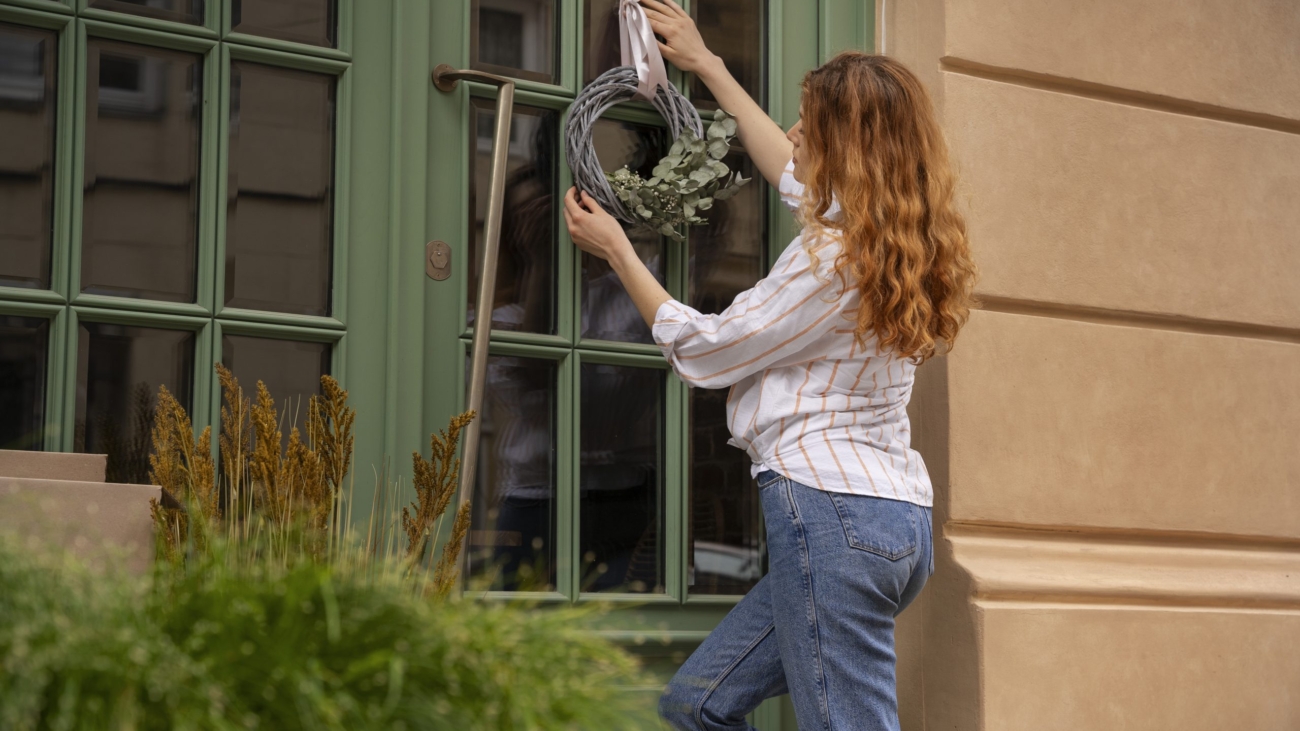
Door Makeover: If your door is old or faded, a fresh coat of paint will bring it new life.. If it is dented or damaged, this is the time to replace it.  Choose a bold color that contrasts nicely with the rest of your home’s exterior to make it pop and provide visual interest in your photos.

Hardware and Fixtures: Update door knobs, house numbers, and light fixtures. Modern hardware can transform the look of your entryway without substantial investments.

Welcome Mat and Decor: Use a new, clean welcome mat and, if there is room, an outdoor bench and/or pot with a plant by the door as this will create a welcoming entry to your home.

3. Upgrade Lighting

Good lighting ensures that your home looks welcoming and safe. It also allows evening viewers to appreciate your home’s exterior.

Pathway Lights: Install low-voltage or solar landscape lighting along the walkway to your door to enhance safety and aesthetics.

Porch Lighting: Ensure that the porch or entryway is well-lit with fixtures that complement the style of your home. Consider adding hanging chandelier style fixtures or pendant lights.

Accent Lighting: Use spotlights to highlight architectural features or landscaping elements, such as beautiful trees or your home’s facade.

4. Refresh Paint and Siding

The condition of your home’s paint and siding plays a significant role in curb appeal. Peeling or chipped paint can signal neglect.

Paint Touch-Ups: A fresh coat of paint can be transformative. If a complete repaint isn’t needed, focus on touch-ups for shutters, trims, and fascias.

Clean the Siding: Wash the siding to remove dirt and grime. For vinyl or brick, a power wash can restore the appearance significantly.

Paint any additional exterior doors: Beyond just your front door, don’t neglect your back door and, if applicable your garage door. These often need a fresh coat of paint and will look fresh and new once they have been addressed.

5. Consider the Roof

Don’t overlook the condition of your roof. It’s a large part of what buyers see from the street.

Clean or Replace: Clean moss and debris from the roof. If your roof is old or damaged, consider replacing it before listing your home. This can be a significant selling point.

6. Accessorize Thoughtfully

Like interior staging, the right accessories can enhance your home’s exterior.

Outdoor Furniture: If you have a porch or patio, showcase these areas with attractive outdoor furniture. Arrange seating areas that invite relaxation. Is there an area of your yard or outdoor space that you can showcase that currently is going unnoticed? Perhaps there is a corner that could become a fire pit/conversation area or a place for a bistro table and chair. Look around and make sure you are capturing the full potential of your yard and outdoor space. If you have a balcony, make sure to give it a function with some furnishings– don’t leave it empty.

Decorative Elements: Use outdoor decorative pillows, an outdoor rug, lanterns and candles as well as pots of plants to accessorize these areas completely, creating a space that buyers will be drawn to and can envision enjoying. These elements should complement the home’s style and not overwhelm the space.

7. Regular Maintenance

Leading up to and during the listing period, regular maintenance is key.

Keep It Clean: Regularly sweep walkways, clean windows, and maintain the yard.

Seasonal Adjustments: Adapt your curb appeal strategies to the season. Ensure pathways are clear of snow in winter, leaves are raked in fall, and weeds are kept at bay in the summer.

By investing time and effort into enhancing your home’s curb appeal, you not only increase the likelihood of attracting potential buyers but also set the stage for a successful and speedy sale. Remember, the goal is to make potential buyers fall in love at first sight, and these tips will help you do just that.

2025 Interior Design and Home Staging Trends

As home stagers, it is important to stay up-to-date on interior design trends. Of course, most of your staging inventory, especially case goods, should be neutral and as timeless as possible, but you will add in more trendy items into things like art and accessories.

Many stagers are now offering design services like short-term rental styling and this is where you can really lean more into design trends. Successful Airbnbs typically marry the local aesthetic with up-to-date design trends.

Since the furnishings in a vacation rental will get much more use than your staging furniture, Airbnbs will also likely need to refresh more often. That bachelor party that got a little too rowdy might knock a piece of art off the wall, and the guest that brought a misbehaved dog might leave spots on the rug. This inevitable turnover offers an opportunity to keep the Airbnb trendy.

These are the trends we are seeing and expecting to see more of in 2025.

Deep, rich hues are making a comeback, and color drenching dark cherry red is leading the charge.

For a recent Airbnb design project for a tiny cabin, we were inspired by the Farrow & Ball color Brinjal. It is absolutely gorgeous and so trendy right now! But, short-term rentals are all about making the highest return on investment, so we opted for a less expensive dupe: Sherwin-Williams® Deep Maroon.

This bold color brings warmth and sophistication to the cabin, and guests have been loving the vintage library vibes. It has been booked every weekend since it first went on Airbnb a few months ago!

Book your stay at the western North Carolina vacation cabin here. The private hot tub is a perfect place to spot a baby bear stealing fruit from the peach tree!

And this is how we incorporated cherry-colored elements into a recent staging project. Notice only the chairs and pillows are the bold color. You don’t want to go overboard with purchasing colors, but a few pops here and there can be a huge asset to your inventory.

Cherries Are the New Bows

Last year, our trends blog predicted that bows would be everywhere. And wow! Are they ever.

You will still see a lot of bows for much of the year, but cherries are quickly replacing them as the “it” motif. While you might expect them to first show up in kitchens, look for cherries in bedrooms too.

As a stager, you might incorporate a cherry-print pillow or some art. If you’re designing a short-term rental, use that as an opportunity to make a cherry bedroom! Airbnbs can be way more taste-specific and follow trends, so why not dive deep into that American-farmhouse style for one of your projects this year?

Staging Tip: Pair dark cherry red with muted tones like brown or matte black to ground the design and avoid overwhelming the space.

Tassels, Texture, and Maximalism

Tassels, layered textiles, and ornate details reminiscent of the Rococo period are trending. From grand couches and furniture to intricately detailed lampshades, designers are embracing playful, feminine maximalism. Think of it as replacing the Grand Millennial style with French Maximalism.

Consider mixing vintage finds, like estate-sale tassel lamps or textured rugs, with modern pieces to achieve a curated, yet contemporary, look in your home staging and design projects.

Bench Seat Sofas and Canopy Beds

Furniture trends are shifting towards timeless comfort and elegance.

Bench seat sofas, known for their seamless, cushion-free design, are gaining popularity for their clean lines and modern feel. As is usual for newer styles, these bench-seat sofas are currently more expensive than multi-cushion dupes. It is important to balance the impact of those extra lines on the sofa with the added inventory expense. Will it make that much difference? Will people, other than designers, even notice?

Notice the picture below. We love the look of this Four Hands sofa we have in our inventory, but remember that when you pay more for your inventory, your margins either get slimmer or you have to charge more. Will your market bear the higher price?

Meanwhile, canopy and four-poster beds are making a resurgence, offering a sense of grandeur and intimacy.

Canopy and poster beds are difficult to use in staging as they require more time to set up and they can be more visually imposing – NOT the effect you want! But for Airbnbs, canopy beds could be the perfect thing to add romance and interest to a room.

Photo and staging by Staging Studio.

Color and Pattern Drenching

Color drenching trended in 2024 and it isn’t going anywhere in 2025. Drenching is when walls, trim, and sometimes ceilings are painted in a single hue. It provides a cohesive, immersive experience that can make a room feel larger and more intentional.

Not only is color drenching still in, but pattern drenching is on the list too. In most cases, pattern drenching may be too taste-specific for staging, but consider it for making a statement in design and short-term rental projects.

Playful Maximalism

Fun is on trend! Think contrast trim, mix-and-match bold patterns, eclectic prints, and more color.

At Las Vegas Market, we saw many neutral aesthetic games used as decor, like dice, tic-tac-toe, and stacking blocks.

Clustered Coffee Tables

Clustered and nested coffee tables are dominating luxury living room layouts, adding movement, scale, and visual interest.

Photo and staging by Staging Studio.

Nested coffee tables have been trending, but start thinking about it as a cluster of tables. The photo below (AI, so not perfect) is close to this idea. Take this and add another smaller table to join the bunch!

This trend aligns with playful maximalism, where design elements don’t just serve a function, but also contribute to the room’s overall artistry.

Other 2025 Design Trends to Watch

A few other trends we’re seeing are terracotta (did it ever really go away?), round stools (these are perfect for stagers because they’re easy to store in the warehouse!), and extra long lumbar pillows. Shag rugs are making a return, and the boucle trend isn’t going anywhere this year.

These 2025 design trends encourage boldness, personality, and a mix of textures, colors, and eras. By integrating dark cherry red accents, incorporating maximalist elements, and balancing vintage with modern, you can create striking, memorable spaces that capture the imaginations of buyers and travelers.